Live Sound Touring
Rigging speed, coverage repeatability, truck pack, monitor workflow, and subwoofer control matter before the audience hears a note.

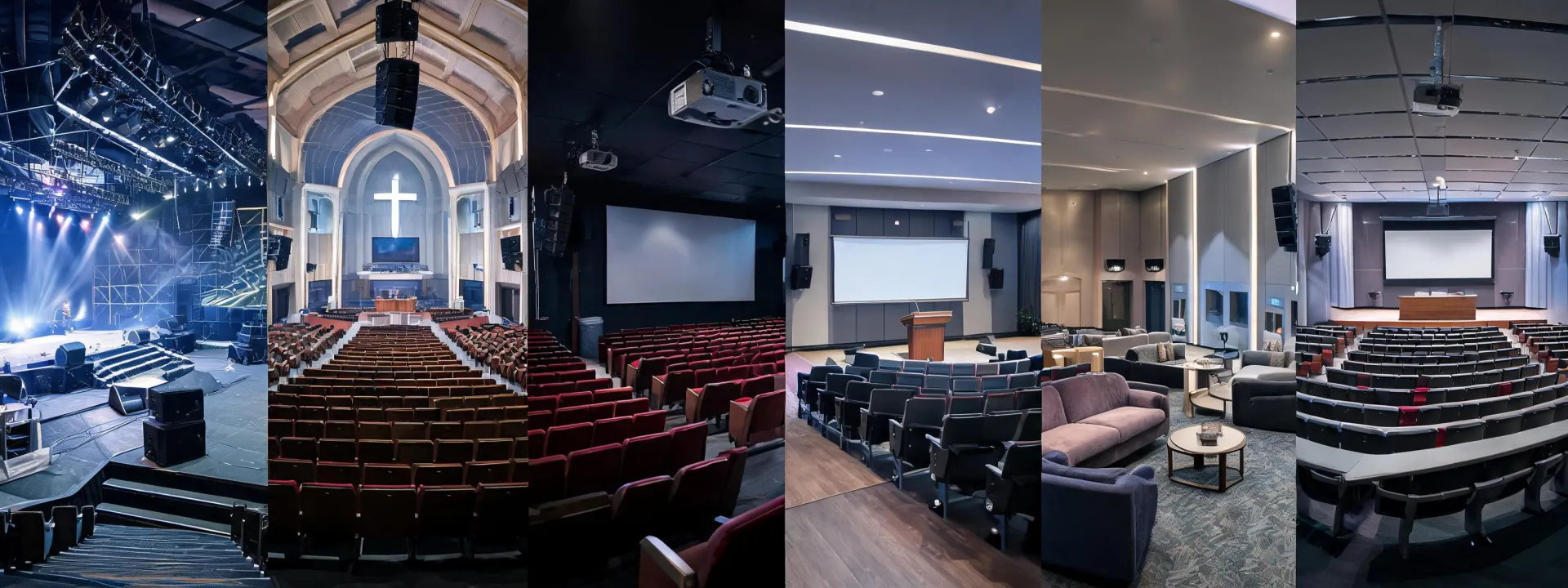
The same loudspeaker can behave differently in a worship room, ballroom, arena, lecture hall, or cinema. QSC application guidance starts with the use case rather than the product SKU.
| Venue Type | Primary Risk | QSC Review Focus |
|---|---|---|
| Touring stage | Inconsistent deployment between stops | Array presets, rigging plan, subwoofer layout, monitor split |
| Worship auditorium | Speech and music pulling in opposite directions | Coverage shading, fill timing, operator scenes, service documentation |
| Corporate hall | Too many users with different technical skill levels | Control permissions, microphone routing, distributed loudspeaker zones |
| Cinema room | Uneven playback across seats | Channel consistency, amplifier reserve, subwoofer placement, calibration notes |
How QSC verifies these claims on site: a measurement microphone captures magnitude and phase at representative seats, the result is compared against the modeled coverage target, and DSP voicing is adjusted until the deployed response tracks the design. The commissioning record — preset names, gain references, network addresses, and the date the room was signed off — is left with the venue so a future technician can repeat the measurement rather than guess. Dealers can arrange a demonstration system or an application-engineer review before a venue commits to a format.
Tell us how the room is used, who operates it, and what failure would look like during an event.
Review a Venue Type