Venue Audio Review
Room drawings, audience geometry, stage dimensions, and acoustic priorities are translated into practical loudspeaker coverage targets.

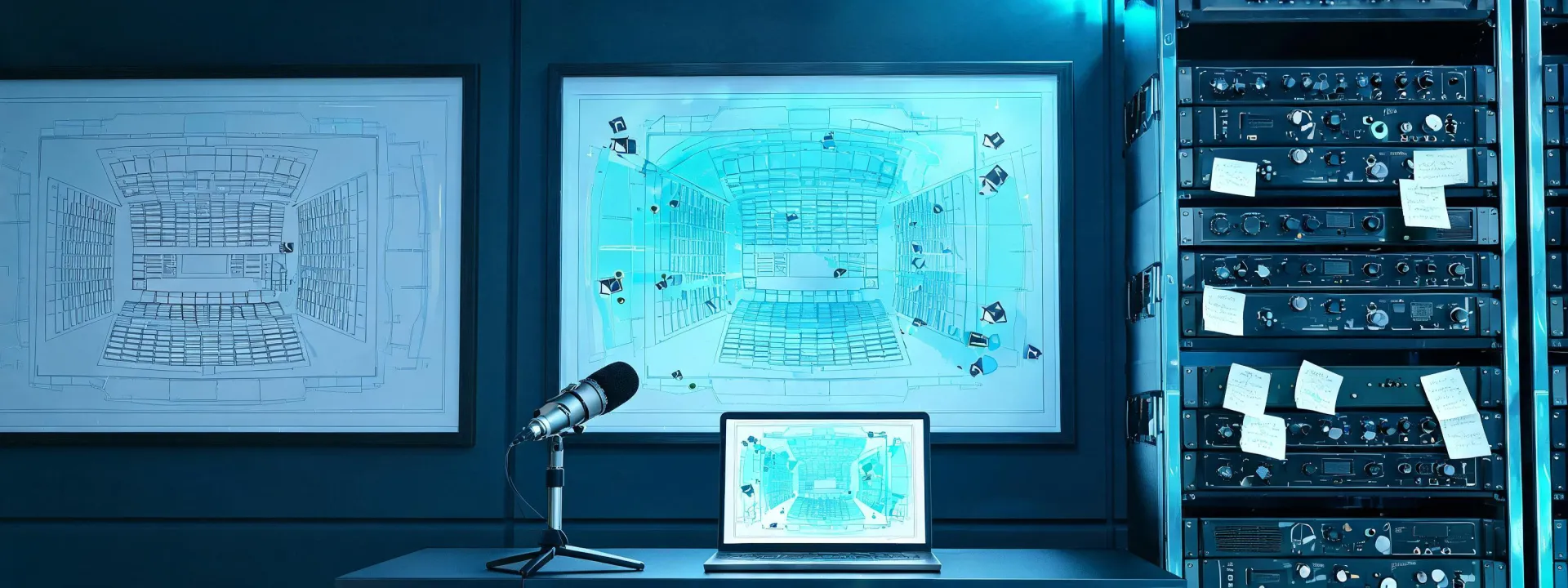
Every project begins with acoustic intent: speech intelligibility, musical headroom, coverage symmetry, service access, and operator control. QSC support is organized for integrators who need clear design checkpoints before hardware is ordered.
Room drawings, audience geometry, stage dimensions, and acoustic priorities are translated into practical loudspeaker coverage targets.
Line arrays, PA speakers, subwoofers, stage monitors, amplifiers, and mixers are mapped against throw distance, SPL, and installation constraints.
DSP presets, gain structure, limiter behavior, and network naming are documented for repeatable startup and easier day-two service.
Project needs are routed to the right dealer or technical partner with enough detail to avoid a generic product quote.
The numbers are intentionally operational: QSC service guidance is useful only when the next action is specific enough for a venue team, dealer, or consultant to execute.
Most venue decisions are trade-offs, and the review names them rather than hiding them. An integrated processing-amplifier platform shortens commissioning and keeps the protection map with the network address, but it ties future replacements to one ecosystem instead of a free swap with any third-party amplifier. Networked control scales zoning and remote monitoring across a building, at the cost of a managed-switch dependency and a few milliseconds of latency that an analog monitor path must account for. Active loudspeakers arrive factory-voiced, while a centralized passive amp room can be simpler to service in some buildings. The brief states which side each project should favor and why.
It also states the limits in plain terms: a reverberant room bounds intelligibility no matter the cabinet count, sustained programs compress headroom below peak SPL, and continuous outdoor or wash-down environments fall outside the rating of standard install cabinets.
Include room dimensions, audience layout, music program, speech priority, rigging limits, and preferred control workflow.