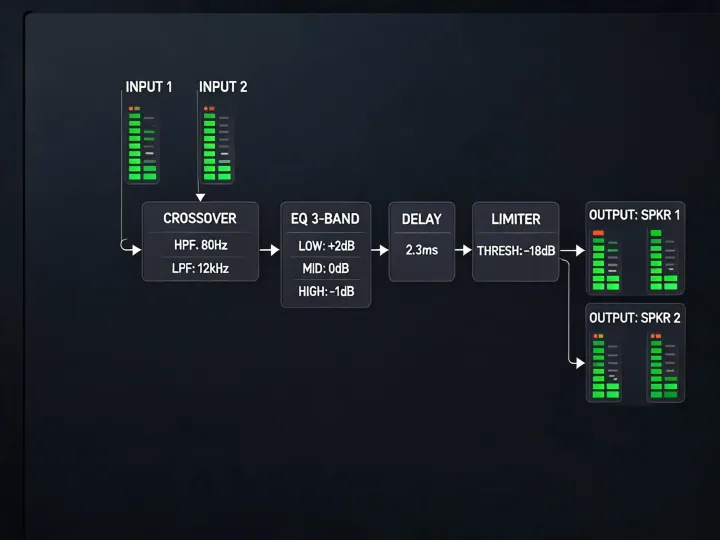

QSC treats the loudspeaker, the processing amplifier, the network transport, and the operator interface as one engineered platform rather than four boxes wired together. The pages below describe that platform thinking: signal routing, DSP protection, and the field-support records that keep a commissioned room repeatable.
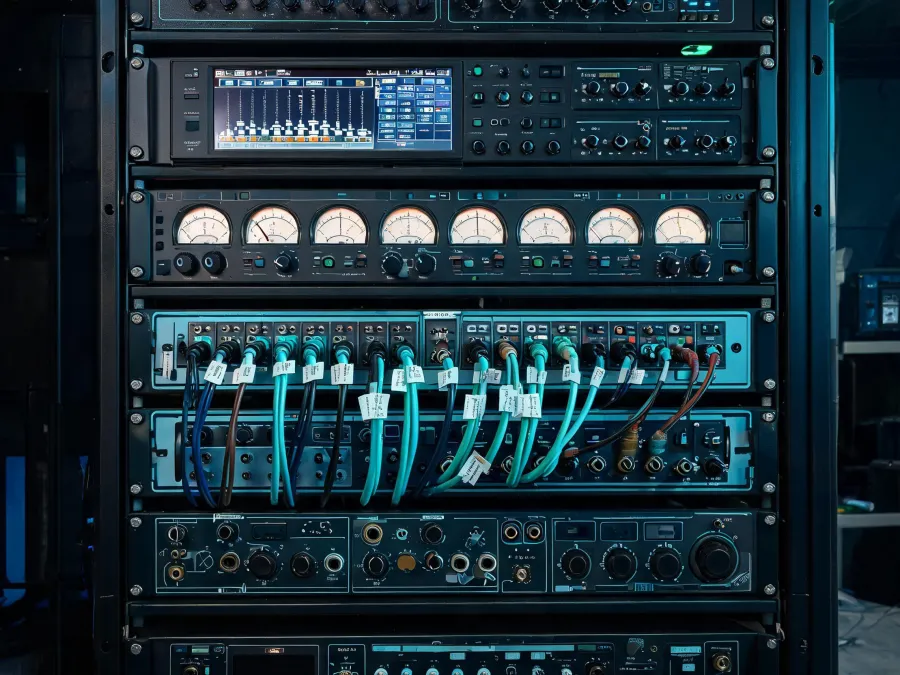
Technology is most valuable when it disappears during the event. QSC systems are planned so that loudspeakers reproduce the room model, amplifiers provide clean reserve, DSP protects the design intent, and operators see controls that match their job.
Our technology target is simple: make the engineered state easy to repeat.
That means the system record matters as much as the first demonstration. Presets, labels, network addresses, limiter thresholds, and tuning notes help future technicians understand why the system behaves the way it does.
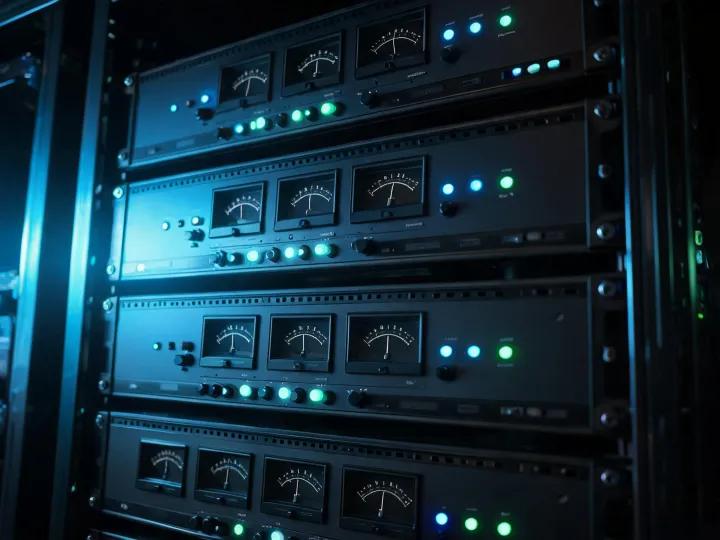
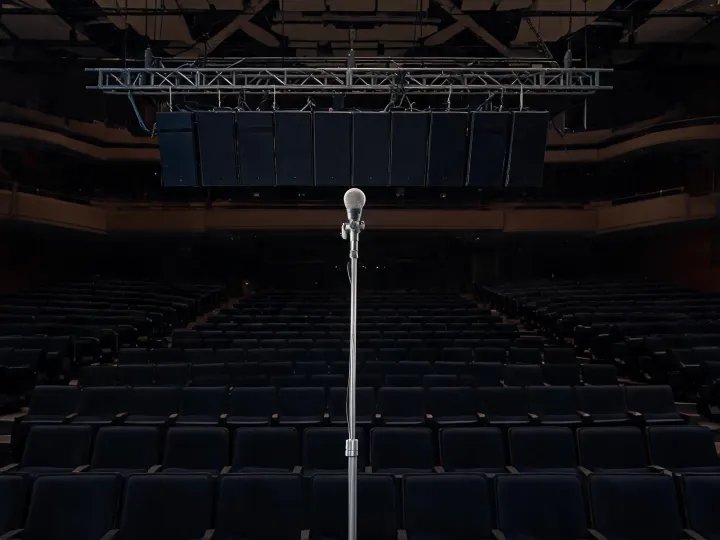
QSC favors integrated, network-controlled systems. That choice has real costs as well as benefits, and a technical buyer deserves both sides before specifying.
| Decision | Integrated / Networked QSC Approach | Trade-off to Weigh |
|---|---|---|
| Processing amplifier vs separate amp + outboard DSP | One device handles power, limiting, FIR voicing, and monitoring, so the protection map and the network address live together. | The platform is less mix-and-match; replacing one element usually means staying inside the ecosystem rather than swapping a third-party amplifier. |
| Networked control (Q-SYS / AES67-style transport) vs analog point-to-point | Zoning, paging priority, and remote monitoring scale across a building without re-pulling copper. | The room now depends on a managed switch and adds processing latency (low single-digit milliseconds) that must be budgeted against any analog monitor path. |
| Powered (active) cabinets vs passive loudspeakers on external racks | Driver protection and voicing are matched at the factory, which shortens commissioning. | Each cabinet needs local mains and a recovery plan; a centralized amp room can be simpler to service in some installs. |
| Cinema / premium AV channel consistency vs touring flexibility | Fixed installs lock calibration so every seat hears the same reference. | That same rigidity is the wrong tool for a touring rig that must re-voice for a new room every night. |
Share the room behavior, operator profile, and service expectations. The answer should connect loudspeakers, DSP, power, and control.